

Erhalten Sie alles, was Sie von einem modernen CDN erwarten – mühelose Skalierung, integrierte Sicherheit, programmatische Kontrolle und vollständige Transparenz.




Sechs häufige Livestreaming-Fehler (und wie man sie vermeidet)
Nachdem wir jahrelang einige der weltweit größten Livestream-Events unterstützt haben, sind uns immer wieder dieselben Fehler aufgefallen. Hier erfahren Sie, wie Sie sie vermeiden können.


Da die FIFA-Weltmeisterschaft 2026 voraussichtlich Hunderte Millionen Zuschauer über Fernseh- und Streaming-Plattformen anziehen wird, könnten selbst wenige Minuten Ausfallzeit schwerwiegende Folgen haben.
Im schlimmsten Fall löst ein Ausfall des Livestreams während einer wichtigen Veranstaltung einen Dominoeffekt aus: negative Reaktionen in den sozialen Medien, massenhafte Abwanderung von Abonnenten und erhebliche Umsatzeinbußen. Doch wenn Live-Veranstaltungen erfolgreich sind, können sie einen enormen Einfluss auf das Geschäftswachstum haben. Ampere Analysis schätzt beispielsweise, dass Netflix in den USA rund 1,5 Millionen Anmeldungen rund um den Boxkampf Paul gegen Tyson im November 2024 verzeichnete – der größte Anstieg der Anmeldungen in den USA, den das Unternehmen seit Beginn der Erfassung im Jahr 2018 verzeichnet hat.
Für die Engineering- und Betriebsteams, die für die Bereitstellung von groß angelegten Livestreams verantwortlich sind, liegt das größte Risiko in der Regel nicht in der Videoauslieferung selbst, sondern in allem, was sie umgibt. Viele Störungen werden nicht dadurch verursacht, dass einem CDN die Bandbreite ausgeht, sondern durch Abhängigkeiten rund um den Stream.
Dieser Blog listet einige der häufigsten Fehler auf, die wir beobachten, wenn Teams sich auf große Livestream-Events vorbereiten – und wir erklären, wie man sie vermeiden kann.
1. Die Annahme, dass es im Maßstab des Events funktionieren wird, weil es zuvor funktioniert hat
Eines der häufigsten Risiken, die wir sehen, wird durch Annahmen verursacht: die Überzeugung, dass nur weil etwas schon einmal funktioniert hat, es auch bei einer Großveranstaltung funktionieren wird. Live-Events führen zu viele Variablen ein, um sich auf Annahmen zu verlassen. Nachfolgend finden Sie einige Beispiele für Fehler, die wir bei Kunden beobachtet haben. Details wurden anonymisiert, um die Vertraulichkeit der Kunden zu schützen.
Einführung eines neuen Workflows kurz vor einem großen Ereignis. In einem Fall führte ein Sender kurz vor seinem größten Event des Jahres einen neuen Produktionsworkflow ein. Dieser funktionierte in kleinerem Maßstab aber unter Spitzenlast zeigte er unerwartetes Verhalten.
Die Annahme, die Traffic-Muster entsprechen der historischen Nachfrage. In einem Fall hatte ein Kunde vor einem Großereignis keine signifikante Nachfrage aus Brasilien festgestellt, sodass historische Muster den Anstieg nicht vorhersagten.
Fokussierung auf die Videoauslieferung bei gleichzeitiger Vernachlässigung der vorgelagerten Abhängigkeiten. Bei einem hochkarätigen Serienstart konnten Nutzer keine Berechtigungen oder Autorisierung validieren, sodass sie das Video unabhängig von der CDN-Bereitschaft nie erreichten. Die anfänglichen Probleme hingen mit den API-Services zusammen, die für die Berechtigungs- und Autorisierungsabwicklung zuständig waren.
Behandlung der digitalen Ad Insertion als Add-on statt als kritische Abhängigkeit. Bei einem großen Event wurde eine DAI-Lösung trotz ihrer Bedeutung für die Monetarisierung nicht in das groß angelegte Lastentestverfahren einbezogen. Unter Spitzenbedingungen wurde es zu einem Risiko.
Angenommen, die Cloud-Infrastruktur wird Traffic-Spitzen automatisch auffangen. In einem Fall zeigten Tests, dass bestimmte Loadbalancer nicht sehr reaktiv auf plötzliche Traffic-Spitzen reagieren und eine Vorwärmung benötigten, um optimal zu funktionieren.
Livestreaming ist wie eine Kette, und das schwächste Glied bestimmt das Erlebnis. Zu den häufigsten Single Points of Failure gehören DNS, globales Loadbalancing/Steering in Multi-CDN-Setups, Abschirmungs-Layer der mittleren Ebene und Origin-Regionen. Separat sind Berechtigungs-/Autorisierungs-APIs eine kritische Abhängigkeit, die die Wiedergabe blockieren kann.
2. Kapazitätsplanung auf der Grundlage der Gesamtbandbreite statt der Traffic-Geschwindigkeit
Spitzen-Bandbreitenzahlen können auf Dashboards beeindruckend aussehen, sind aber einer der unzuverlässigsten Indikatoren für Ausfälle. Wir sehen regelmäßig einen Anstieg des Traffics von 0 auf 5 Tbit/s innerhalb weniger Minuten, mit weiterem Wachstum darüber hinaus. Aber diese Anstiege sind selten gleichmäßig verteilt. Streams verschlechtern sich in der Regel nicht global; sie verschlechtern sich regional.
Als einer unserer großen Rundfunkkunden einen Sport-Streaming-Service einführte, verzeichnete das erste Spiel einen unerwartet massiven Ansturm in Chile. Prognosen hatten ihn nicht vorhergesagt. Ein Großteil des Traffics entpuppte sich als illegale Streams. Das globale Bild wirkte stabil, aber regional musste das System eine plötzliche, konzentrierte Nachfrage verkraften. Es waren Traffic-Engineering-Anpassungen in Echtzeit erforderlich, und für die nachfolgenden Veranstaltungen wurden Abwehrstrategien implementiert.
Wir haben auch Fälle gesehen, in denen Multi-CDN-Steering den Traffic überproportional auf einen Anbieter verlagerte. Dies geschah nicht, weil das Ereignis größer als prognostiziert war, sondern weil sich das Routing unter Last anders verhielt. Aus Sicht der globalen Bandbreite sah alles gut aus. Aus regionaler und anbieterspezifischer Sicht nahm der Druck schnell zu.
Nicht immer ist ein dauerhafter Durchsatz die Ursache für Systemausfälle. Es ist die Geschwindigkeit. Ein plötzlicher Anstieg von Manifest-Anfragen oder Berechtigungsprüfungen kann die Origin-Server überwältigen, bevor der erste Video-Frame abgespielt wird.
Wer bei der Planung auf den „durchschnittlichen globalen Traffic“ setzt, plant für den falschen Ausfallmodus. Kapazitätsmodelle müssen plötzliche, lokal begrenzte Spitzenlasten berücksichtigen und der Tatsache Rechnung tragen, dass sich der Traffic nicht immer vorbildlich verhält.
3. Testen von Traffic anstatt des tatsächlichen Zuschauerverhaltens
Das Generieren hoher Anfragezahlen pro Sekunde ist unkompliziert. Die Simulation einer großen Anzahl realer Zuschauer ist jedoch nicht möglich.
Wenn Sie testen möchten, wie 10.000 Zuschauer einen Stream ansehen, bedeutet das nicht, dass Sie 10.000 Anfragen so schnell wie möglich stellen müssen. Es bedeutet vielmehr, 10.000 unabhängige Player zu simulieren, von denen jeder seinen eigenen Status verwaltet, Manifestdateien im richtigen Intervall abruft, Segmente nacheinander anfragt sowie Cookies und Eigenschaften von Endgeräten verwaltet.
Wir haben gesehen, dass Testumgebungen auf vorkodierte Inhalte bei relativ niedrigem anhaltendem RPS setzen, was effektiv einen VOD-ähnlichen Workflow simuliert. Livestreaming ist anders. Segmente werden dynamisch von Encodern erzeugt, wodurch Latenz und Computing-Charakteristika entstehen, die nicht übersehen werden sollten.
Das Ziel des Testens sollte nicht einfach sein, Traffic zu generieren, sondern echte Zuschauer zu simulieren. Das bedeutet, Player-basierte Lasttests zu verwenden, mit Encoder-generierten Streams statt statischen Inhalten zu testen und den vollständigen Workflow von Berechtigungs-APIs über Ad Insertion und Origin-Auslieferung zu validieren.
Viele Tests werden bestanden, weil sie Durchsatz und Fehlerraten messen. Diese Tests erweisen sich im realen Leben als ungeeignet, da sie das Verhalten nicht simulieren. Der Zweck von Tests sollte nicht darin bestehen, Beruhigung zu bieten, sondern darin, herauszufinden, wo das System an seine Grenzen stößt, bevor das Internet es tut.
4. Vorbereitung auf den Erfolg statt das Proben von Misserfolgen
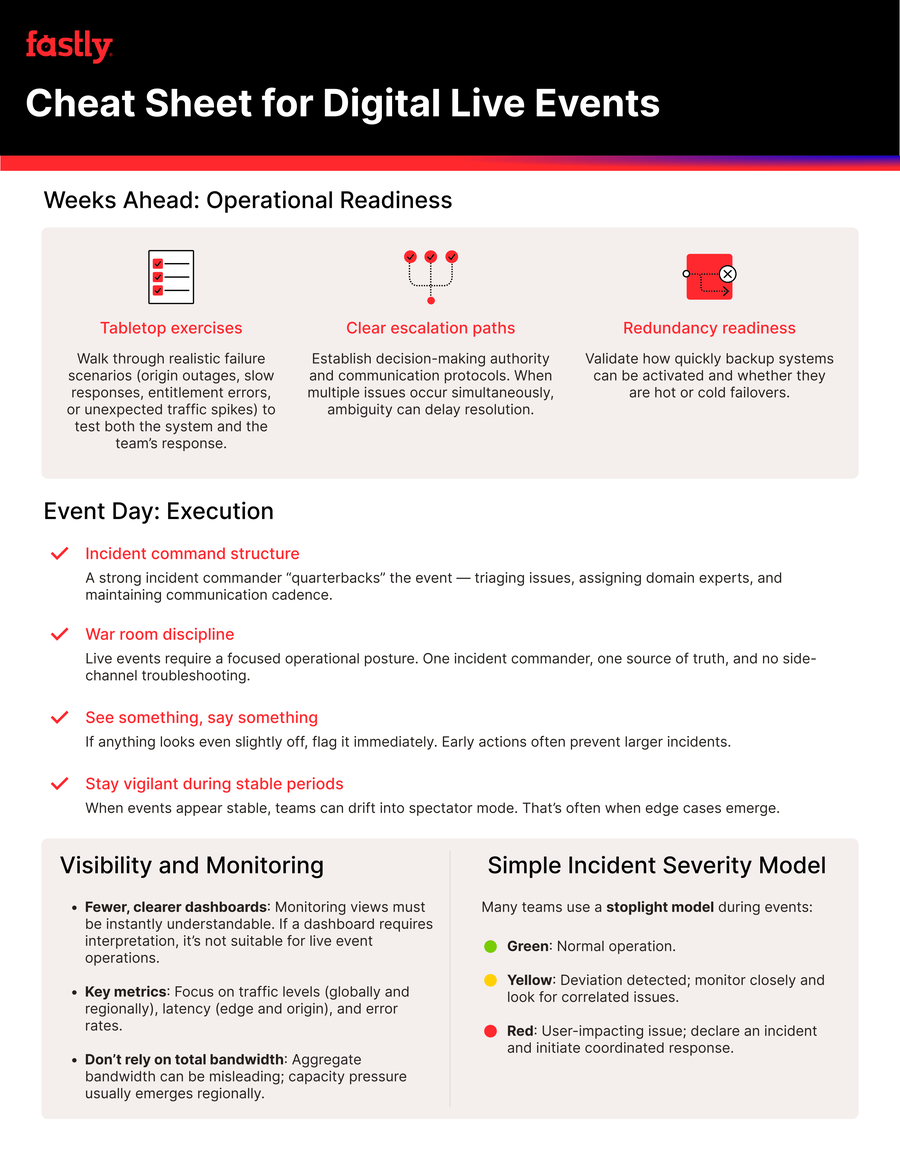
Architekturüberprüfungen und Lasttests helfen, potenzielle Risiken aufzudecken. Aber in den Wochen vor einem Ereignis ist die eigentliche Frage nicht, ob Risiken existieren, sondern ob das Team reagieren kann, wenn diese Risiken real werden.
Die nützlichsten Planspiele gehen davon aus, dass etwas schiefgeht, nicht dass alles erfolgreich funktioniert. Was passiert, wenn ein Origin-Server langsam wird, aber keinen Fehler erzeugt? Wenn Entitlement-Services anfangen, erhöhte 403-Fehlermeldungen zurückzugeben? Was passiert, wenn mehrere CDNs an die regionale Kapazitätsgrenze stoßen und Sie höhere Bitraten aus den Manifesten entfernen müssen?
Planspiele zeigen oft, dass die größten Lücken nicht architektonischer, sondern organisatorischer Natur sind. Wer meldet eine Störung? Wer kommuniziert extern? Wie schnell kann ein redundantes System online gebracht werden? Eine redundante Komponente, die auf einem langen Runbook beruht, das noch niemand geübt hat, ist in der Praxis ein Single Point of Failure.
Wir haben festgestellt, dass der einzige echte, vollständige Ausfall nicht bei einer internationalen Sportveranstaltung, sondern bei einer Mitarbeiterversammlung eines Unternehmens stattfand. Der primäre Encoder fiel aus und ein sekundärer Encoder war nicht schnell genug bereit, die Funktion zu übernehmen. Innerhalb von 30 Minuten war die Veranstaltung praktisch beendet. Es war kein Bandbreitenproblem, sondern ein Single Point of Failure in der Verschlüsselungskette.
5. Verlassen auf Heldentum statt auf betriebliche Struktur
Live-Events erfordern Struktur. Alle Beteiligten müssen ihre Rolle vor Beginn der Veranstaltung verstehen.
Es muss einen klaren Störungsverantwortlichen geben, der die Fäden in der Hand hält – Probleme priorisiert, Domain-Experten zuweist, die Kommunikationsfrequenz aufrechterhält und die Lösung kennzeichnet. Wenn mehrere Probleme gleichzeitig auftauchen, ist es entscheidend, sie in Echtzeit zu untersuchen und die richtigen Ressourcen zuzuweisen.
Einer der häufigsten Fehler in Krisenstäben ist der Verlust des Fokus. Wenn die Lage stabil erscheint, nimmt das Geplänkel zu. Insbesondere Sportveranstaltungen sind lang und emotional mitreißend. Vor- und Nachberichterstattung können sich über Stunden erstrecken. Man gerät leicht in den Zuschauermodus. Genau dann treten oft Sonderfälle auf.
In einigen der stärksten Events, die wir unterstützt haben, haben Kunden alle kritischen Anbieter im selben Raum platziert. Die räumliche Nähe beschleunigte die Koordination und reduzierte Silos. Wenn Anbieter in getrennten virtuellen Kanälen isoliert sind, verlangsamt sich die Zusammenarbeit naturgemäß.
Live-Events belohnen keine Heldentaten. Sie belohnen disziplinierte Koordination.
6. Warten, bis Probleme in den Dashboards angezeigt werden
Redundanz allein garantiert keine Stabilität. Was die Ergebnisse konsequent verändert, ist Echtzeittransparenz und die Fähigkeit, schnell zu handeln.
Wir beobachten regelmäßig Signale auf Netzwerk- oder ASN-Ebene – zum Beispiel eine Verlangsamung der Internetverbindung eines bestimmten Internetanbieters in einer bestimmten Stadt – bevor diese Muster in umfassenderen Dashboards sichtbar werden. In einigen Fällen sind Anomalien 30 bis 90 Sekunden früher sichtbar, als sie an anderer Stelle im Ökosystem allgemein erkannt werden. Dieses frühe Zeitfenster kann bestimmen, ob ein Problem eingedämmt oder verstärkt wird.
Die Edge-Cloud-Plattform von Fastly bietet dieses Maß an Echtzeittransparenz über Netzwerke und Regionen hinweg und ermöglicht es Betreibern, neue Probleme schnell zu erkennen und darauf zu reagieren.
Ebenso wichtig ist Agilität. Während Live-Events können Anpassungen in Minuten erforderlich sein: Blockieren von Traffic aus einer Region, die eine missbräuchliche Last verursacht, Umschreiben eines unerwarteten URL-Musters, das Fehler verursacht, Anpassen von Origin-Timeouts oder gezieltes Verschieben von Traffic. Die Plattform von Fastly ermöglicht es, solche Konfigurationsänderungen innerhalb von Sekunden global bereitzustellen, was den Betreibern die Flexibilität gibt, während einer Live-Veranstaltung zu reagieren.
Im großen Maßstab sind die Geschwindigkeit der Einblicke und die Geschwindigkeit von Änderungen genauso wichtig wie die reine Kapazität.
Abschließende Überlegungen
Livestreaming in großem Maßstab ist nicht in erster Linie ein Bandbreitenproblem. Es ist ein Systemproblem.
Es erfordert die Erkenntnis, dass Abhängigkeiten jenseits des Videos entscheidend sind, dass der Traffic ungleichmäßig beschleunigt wird, dass realistische Tests teuer und unangenehm sind und dass disziplinierte Koordination genauso wichtig ist wie die Architektur.
Wenn alles reibungslos läuft, ist es ganz einfach: Das Publikum sieht einen Livestream, die Dashboards bleiben unter Kontrolle und im Krisenstab herrscht Ruhe. Nicht, weil nichts schiefgelaufen wäre, sondern weil das System so konzipiert, getestet und betrieben wurde, dass es Fehler auffangen kann.
Bei Fastly haben wir viele groß angelegte Live-Events unterstützt und aus erster Hand erlebt, wie Vorbereitung den Erfolg bestimmt. Erfahren Sie mehr darüber, wie Fastly Livestreams in großem Maßstab unterstützt.