

Ottieni tutto ciò di cui hai bisogno da una CDN moderna: dalla scalabilità senza sforzi alla sicurezza integrata, dal controllo programmabile alla visibilità completa.




Le scarse prestazioni frenano la crescita di SaaS/PaaS: ecco perché la tua CDN è fondamentale
Migliora le prestazioni delle tue applicazioni SaaS e PaaS con la CDN giusta. Scopri come migliorare velocità, sicurezza e scalabilità supportando al contempo una strategia di crescita basata sul prodotto con Fastly.


Una grande piattaforma SaaS/PaaS ha il potere di favorire la penetrazione del mercato e mantenere la quota di mercato conquistando i clienti. D’altra parte, una cattiva esperienza SaaS/PaaS può danneggiare l’immagine del brand e causare l’abbandono dei clienti.
Le prestazioni sono al centro della customer experience. Influiscono su adozione, fidelizzazione, quota di mercato e fiducia nel brand. Senza una Rete di distribuzione dei contenuti, le aziende SaaS/PaaS faticano a raggiungere la scalabilità, la sicurezza e la distribuzione necessarie per offrire esperienze web rapide, sicure e resilienti. Tuttavia, non tutte le CDN sono uguali quando si tratta di supportare le piattaforme SaaS/PaaS, date le loro esigenze.
In questo blog, illustreremo cosa considerare quando si seleziona una rete di distribuzione dei contenuti come azienda SaaS/PaaS.
La concorrenza e la crescita guidata dal prodotto alzano la posta in gioco
La concorrenza tra i provider SaaS/PaaS è diventata feroce. La capacità di una piattaforma SaaS/PaaS non solo di supportare i propri clienti, ma anche di favorirne l’adozione, è diventata un principio fondamentale della crescita guidata dal prodotto.
La maggior parte delle aziende SaaS e PaaS utilizza una soluzione CDN per distribuire i propri contenuti, aumentare l'efficienza della propria infrastruttura grazie alla cache globale e proteggere l'accesso alla piattaforma tramite tecnologie WAF Queste qualità portanti di una CDN sono diventate requisiti minimi per SaaS/PaaS.
Di cosa hanno bisogno le moderne piattaforme SaaS/PaaS da una CDN
Non tutte le reti di distribuzione dei contenuti sono uguali nella loro capacità di supportare la varietà di piattaforme SaaS/PaaS mentre competono per la posizione di vertice nel loro settore.
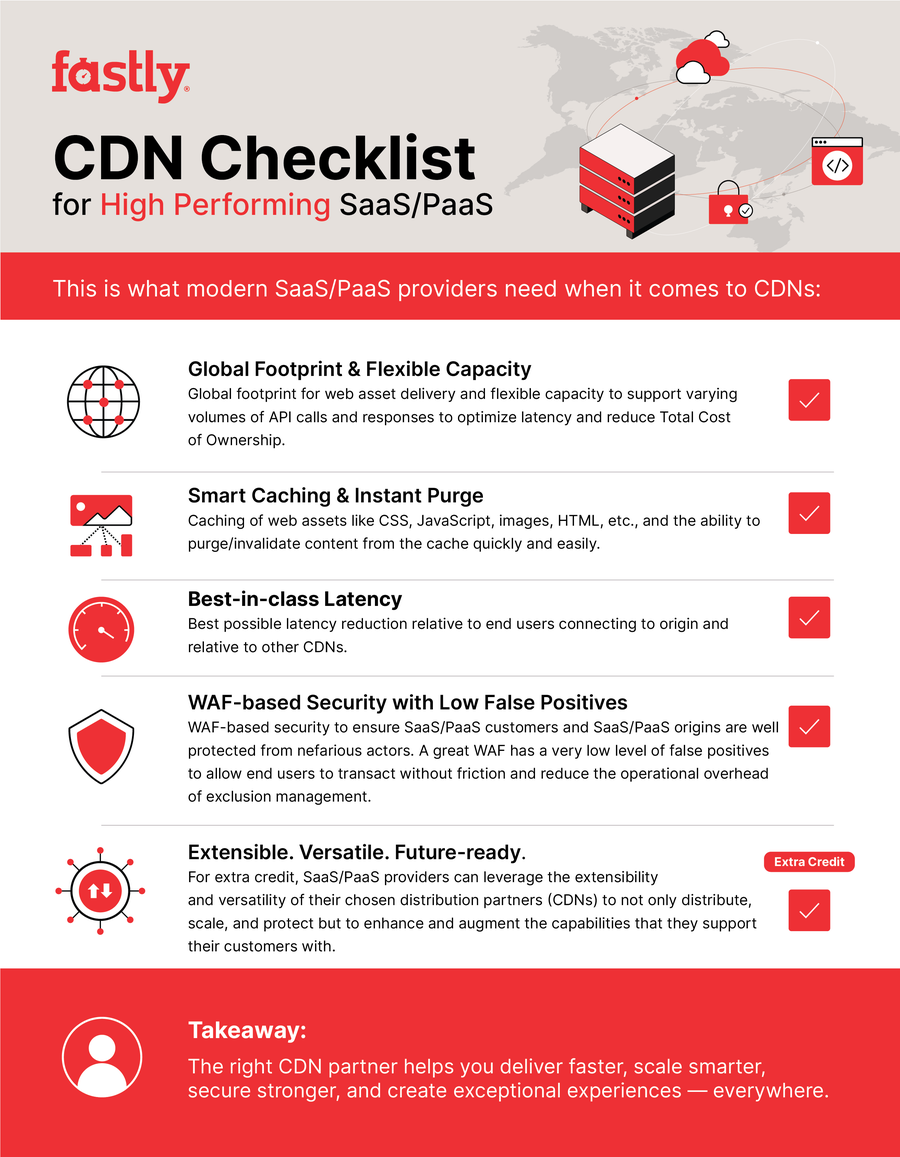
Ecco di cosa hanno bisogno i moderni provider SaaS/PaaS in termini di reti di distribuzione dei contenuti:
Presenza globale per la distribuzione delle risorse web e capacità flessibile per supportare volumi variabili di chiamata API e risposta, al fine di ottimizzare la latenza e ridurre il costo totale di proprietà
Caching di risorse web come css, javascript, immagini, HTML ecc. e capacità di eseguire il purge/invalidare rapidamente e facilmente i contenuti dalla cache
La migliore riduzione possibile della latenza rispetto agli utenti finali che si connettono all’origine e rispetto ad altre reti di distribuzione dei contenuti
Sicurezza basata su web application firewall per garantire che i clienti SaaS/PaaS e le origini SaaS/PaaS siano ben protetti da attori malevoli. Un ottimo web application firewall ha un livello molto basso di falsi positivi per consentire agli utenti finali di effettuare transazioni senza attriti e ridurre i costi generali operativi della gestione delle esclusioni
Come vantaggio aggiuntivo, i provider SaaS/PaaS possono sfruttare l’estensibilità e la versatilità dei partner di distribuzione scelti (reti di distribuzione dei contenuti) non solo per distribuire, scalare e proteggere, ma anche per migliorare e ampliare le funzionalità con cui supportano i clienti.
Estendere le capacità SaaS/PaaS ai bordi della rete con Fastly
Fastly offre la rete edge più grande e più estensibile del pianeta (532 Tbps al momento della stesura, ad aprile 2026). La piattaforma offre un approccio unico all’architettura di server e rete, che consente ai provider SaaS/PaaS di raggiungere gli obiettivi di efficienza promessi da una Rete di distribuzione dei contenuti. Inoltre, Fastly consente ai provider SaaS/PaaS di fare affidamento sul livello della Rete di distribuzione dei contenuti per offrire ai propri clienti funzionalità innovative che li mettano nella posizione migliore possibile per competere.
Fastly utilizza Varnish come “motore di caching” ed espone VCL (Varnish Configuration Language) ai clienti per consentire loro di implementare una dinamica personalizzata di richiesta/risposta. Per SaaS/PaaS, questo significa che non è più necessario terminare le richieste all’origine per fornire interazioni reattive e tempestive agli utenti finali. Un ulteriore vantaggio è che Fastly genera approfondimenti sui dati che rispecchiano molto da vicino i dati proprietari. Agisce davvero come un’estensione delle applicazioni SaaS/PaaS fino all’edge.
Costruito per l’Internet moderno
L’architettura di server e rete di Fastly è stata costruita per l’internet moderno e per la topologia della rete globale di oggi. Invece di avere piccoli point of presence ovunque... come proxy inverso (ogni Rete di distribuzione dei contenuti è un proxy inverso), è meglio avere point of presence molto grandi in posizioni strategiche dove osserviamo un’elevata variabilità di richieste in un periodo di tempo più breve. Questo consente alle nostre cache di riscaldarsi più rapidamente e di espellere i contenuti dalla cache meno facilmente grazie all’elevata densità della cache che otteniamo con la nostra architettura server. Fastly offre anche la possibilità di eseguire il purge/invalidare la cache globale in 150 ms a livello globale al 95° percentile, il che consente alle piattaforme SaaS/PaaS con uso intensivo di API di memorizzare nella cache quanto più possibile. Per semplificare il purge/l’invalidazione della cache, Fastly offre agli operatori diversi metodo di purge (incluso il purge basato su API).
Per quanto riguarda l’ottimizzazione della latenza, i principi di progettazione fondamentali di Fastly sono specificamente concepiti per ottenere le massime prestazioni. I server cache sono tutti basati su solid-state drive con enormi quantità di RAM in ogni macchina. Ogni cache node è caricato con tantissime ottimizzazioni “dietro le quinte”, come tabelle di ricerca dei clienti per i nostri solid-state drive, ottimizzazione dello stack TCP, assenza di router nella nostra rete e persino la riscrittura dei kernel Linux per assicurarci di non lasciare nulla di intentato per rendere rapida la distribuzione ai nostri clienti. Sul lato rete, Fastly mantiene connessioni keep-alive verso l’origine, scrive il proprio stack di negoziazioni TLS, gestisce la propria rete di provider di transito Tier 1 e accordi di peering e ha implementato un notevole codice personalizzato per garantire che la rete possa “autoripararsi” e “auto-ottimizzarsi”.
Ripensare la sicurezza: ridurre i falsi positivi con NGWAF
Ogni web application firewall (diverso da NGWAF di Fastly) utilizza la corrispondenza regex per rilevare parola chiave e bloccare le richieste che le contengono. Questo comporta un numero elevato di falsi positivi, il che significa che anche le interazioni degli utenti finali vengono bloccate. L’effetto netto di questa dinamica è che gli operatori degli strumenti web application firewall legacy sono impantanati nella gestione delle esclusioni e delle policy.
L’approccio di Fastly al web application firewall utilizza una tecnologia proprietaria chiamata Smartparse, che esegue l’analisi lessicale di ogni payload della richiesta. Se tale analisi produce un eseguibile, Fastly lo blocca. Fastly offre anche la possibilità di monitorare le policy di mitigazione proposte: gli operatori non devono essere necessariamente in modalità Block o log; possono anche osservare per testare l’efficacia delle policy di mitigazione proposte utilizzando Signals. Ciò consente agli operatori di Fastly di mantenere una solida strategia di mitigazione di base e aggiungere nuove policy di sicurezza solo quando necessario.
Oltre l’86% dei clienti Fastly WAF utilizza NGWAF in modalità di blocco ed è una ragione significativa per cui Fastly ha ricevuto il premio Gartner Peer Insights™ Security Customer Choice per gli ultimi 7 anni consecutivi.
Scopri come Fastly aiuta le aziende high tech a scalare più velocemente, offrire prestazioni migliori e restare al sicuro.